
Best MSPs for Higher Education in Lubbock (2026)
Quick Picks
- Best Documented Higher Ed Practice: Mandry Technology — 8.1/10
- Best for Scale and Multi-Campus Coverage: CTSI — 7.9/10
- Best Financial-Grade Security Discipline: CoNetrix — 6.3/10
- Best for TX-RAMP Compliance Crossover: Simpatico Systems — 5.2/10
Lubbock runs on higher education more than most cities its size. Texas Tech University alone enrolls roughly 40,000 students. Lubbock Christian University, South Plains College, and Wayland Baptist University add thousands more. That density creates real IT demand: FERPA-compliant data handling, campus network infrastructure at scale, student information system security, and the TX-RAMP certification now required for any cloud vendor serving Texas public higher education institutions.
Finding MSPs that actually document higher education as a practiced vertical — not just a checkbox on a services grid — is harder. Most Lubbock IT providers serve education clients. Far fewer build their compliance posture and service documentation around it.
The honest editorial note, stated up front rather than buried: Lubbock’s MSP market has not caught up to the city’s higher education density. Texas Tech alone creates IT demand that should produce more documented education specialization than this market currently shows. One provider here has built a real education practice. The rest range from adjacent-and-transferable to no documented education evidence at all. That gap is an opportunity for providers and a reason for buyers to ask pointed questions.
How We Ranked These MSPs
Six independently researched criteria, weighted and applied the same way to every provider. No provider submitted their own data. Review Score (35%) accounts for verified Clutch reviews, Google reviews, and Cloudtango ratings; providers without a Clutch profile lose half the Clutch sub-weight permanently, because Clutch verification requires real clients to complete phone interviews. Industry Awards (20%) covers Channel Futures MSP 501, CRN MSP 500, CRN Tech Elite 250, Inc. 5000, and Cloudtango MSP Select, with multi-year appearances scoring higher than one-time wins. Years in Business (15%) rewards operational longevity. Physical Presence (10%) evaluates verified offices and named local staff — a virtual address scores differently than a staffed building.
Higher Education Specialization (10%) is the vertical-specific factor, and it is where this list separates. We evaluated dedicated education service pages, FERPA and CIPA compliance documentation, named higher education clients, TX-RAMP readiness, and evidence of serving colleges directly. A bullet point listing “education” as a served industry does not score the same as a dedicated page with named compliance frameworks. Service Breadth (10%) looks at core stack coverage plus premium differentiators.
Trust Score Factors — Lubbock Higher Education MSP Rankings
No provider paid for placement. See exactly how we score every provider →
Why this page shows totals but no per-factor breakdown
Most itreviews.co rankings publish each provider’s six factor scores alongside the total. This page does not. Recomputing all five providers from their own published sub-scores produced results that did not match the stated totals in four of the five cases, by margins between 0.1 and 0.4 points and in both directions. Rather than display factor bars we cannot stand behind, we are publishing the totals as scored and withholding the breakdown until the next cycle.
Two consequences a reader should know, because both affect how this list should be used.
On the published sub-scores, Mandry Technology and CTSI tie exactly. Both compute to 8.075. The 0.2-point gap shown between them does not exist in the underlying factors — CTSI’s advantages on awards, tenure, and office coverage offset Mandry’s advantage on education specialization almost perfectly. Treat #1 and #2 as co-leaders and choose between them on fit, which is a genuinely clear choice: documented FERPA methodology (Mandry) versus four-city on-site coverage (CTSI).
The #4 and #5 positions would also swap. Blue Layer IT computes to 5.35 and Simpatico Systems to 5.13, the reverse of the order shown. Both sit far enough below the top three that the practical impact is small, but it is stated here rather than left for a reader to discover.
Separately, the review figures for Simpatico Systems and Blue Layer IT were carried forward as estimates rather than verified counts, and are reported qualitatively below for that reason.
Higher Education MSP Comparison at a Glance
| Provider | Trust Score | Best For | Key Strength | Location | Notable Limitation |
|---|---|---|---|---|---|
| Mandry Technology | 8.1/10 | Colleges needing a FERPA-documented IT partner | Two dedicated education pages, named FERPA/CIPA/TX-RAMP, SOC 2 Type II, 20+ years | Lubbock (HQ) + N. and S. Texas hubs | No staffed office in Amarillo, Midland, or Abilene |
| CTSI | 7.9/10 | Multi-campus institutions wanting regional coverage | CRN Tech Elite 250 (2025), four West Texas offices, 74 Google reviews at 4.9 | Lubbock (HQ) + Midland, Abilene, Amarillo | Education served but not documented as a specialization |
| CoNetrix | 6.3/10 | Institutions prioritizing financial-grade security controls | 49 years operating, $15.3M new Lubbock facility, LCU partnership | Lubbock (HQ) + Midland, Abilene, Amarillo | Primary vertical is banking, not education |
| Simpatico Systems | 5.2/10 | Institutions needing TX-RAMP compliance guidance | TX-RAMP experience, CMMC Registered Practitioner Organization | Lubbock (HQ) + Dallas, Valencia CA | No dedicated education page or FERPA documentation |
| Blue Layer | 5.0/10 | Campus IT support without compliance requirements | Inc. 5000 (2020, 2021), CRN MSP 500 Pioneer 250 (2023) | Lubbock (HQ) | No education-specific documentation found |
The Top 5 MSPs for Higher Education in Lubbock
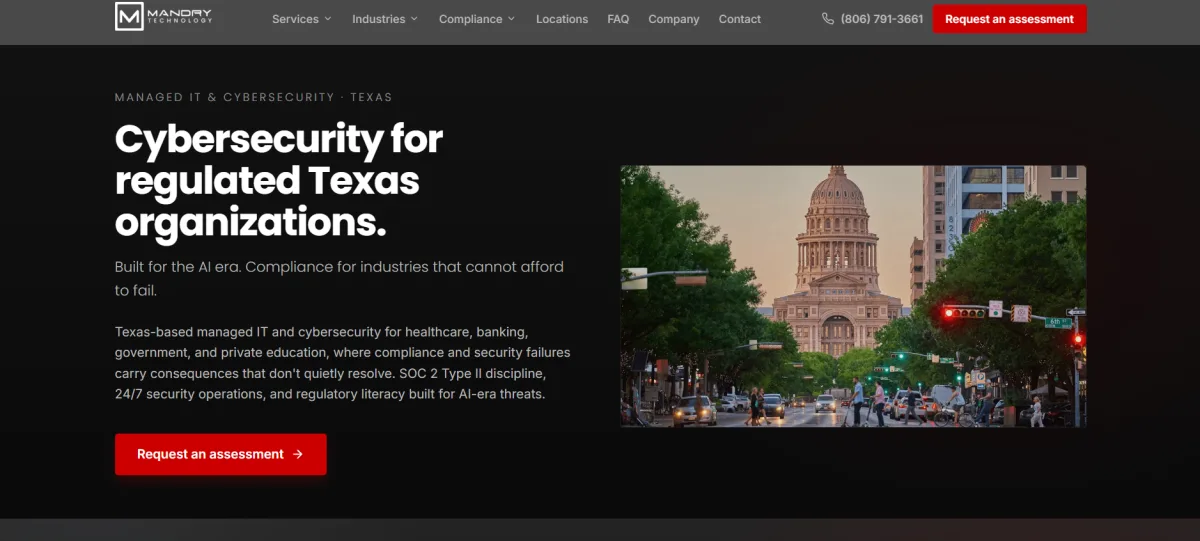
Twenty years serving colleges, school districts, and private institutions across West Texas and Eastern New Mexico. Not a generalist MSP that happens to have education clients — a firm that organizes its compliance posture around the frameworks higher education actually answers to. Their own framing is precise: they build for “compliance and security failures that don’t quietly resolve.”
Key Strengths
- Two dedicated education pages — one covering education IT services broadly, another addressing colleges, public school districts, and private K-12 specifically. Verified live. That level of documentation is rare in a market this size.
- Named compliance frameworks that matter here: FERPA, CIPA, COPPA, and TX-RAMP, listed alongside HIPAA, FFIEC, and GLBA as practiced frameworks rather than aspirational ones. Their own copy makes the transfer argument explicitly: “the same operating discipline that supports a community bank’s FFIEC examination supports a Texas school district’s TX-RAMP.”
- SOC 2 Type II certified. That discipline carries directly into higher education environments where accreditors and cyber insurance carriers inspect documentation.
- MSP 501 top 100 finisher (2020, 2021), CRN MSP 500, CRN Next Gen 250, MSPAlliance Cloud Verify and Cyber Verify, Cloudtango MSP Select 2026. Not just regional recognition.
- The only provider here with a Clutch profile — 4.9 across 12 verified reviews, which is why they carry the strongest Review score despite a smaller Google footprint than CTSI.
Limitations
- No staffed office in Amarillo, Midland, or Abilene. Mandry runs Lubbock plus North Texas and South Texas service hubs; CTSI has engineers in all four West Texas cities. For a multi-campus system, that is the deciding difference.
- Google Maps rating of 4.5 across 15 reviews is solid but modest, and well below CTSI’s 74. The Clutch profile offsets this in scoring, but if raw public review volume is your comfort signal, it is thinner here.
- Smaller overall operational footprint than a New Charter-backed competitor.
Best For
Colleges, community colleges, and private universities that need an MSP with documented FERPA compliance methodology and a genuinely practiced higher education vertical.Not Ideal For
Institutions needing same-day on-site coverage in Amarillo, Midland, or Abilene from a provider with staffed offices in those cities.Why They Rank #1
The methodology can only follow the evidence, and Mandry is the only Lubbock MSP that documents higher education as a practiced vertical with named compliance frameworks. FERPA, CIPA, TX-RAMP, SOC 2 Type II, and 20 years of education-specific work. On the specialization factor that matters most for this buying decision, nobody else is close. Read this as a co-lead with CTSI rather than a clear win, though — see the scoring note above.
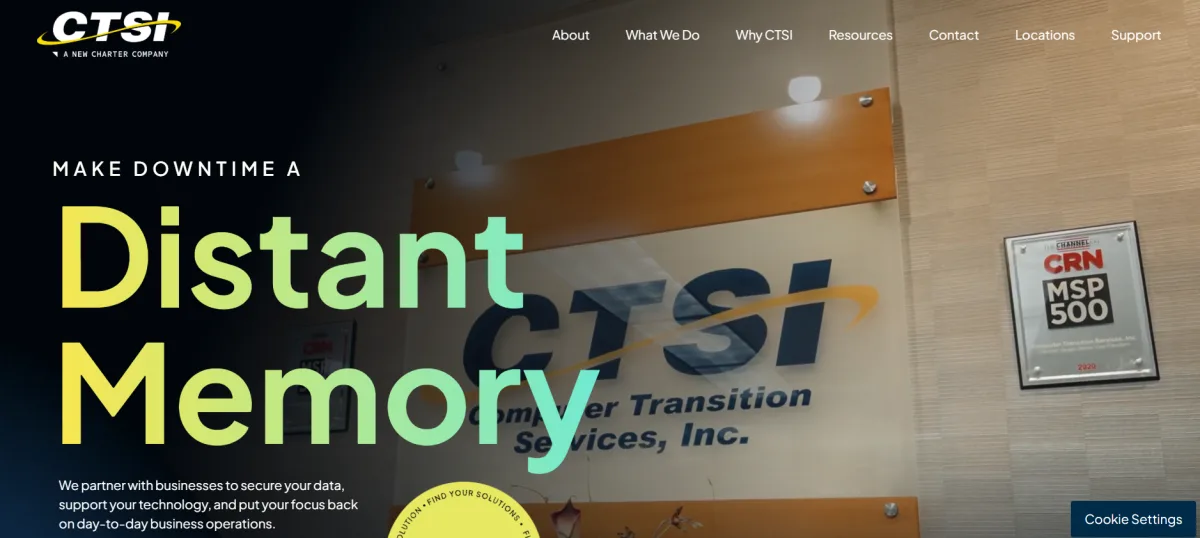
The largest MSP footprint in West Texas. Four offices, 40 years of operation, and a 2025 CRN Tech Elite 250 designation reflecting vendor-level technical depth most Lubbock competitors cannot match. On the underlying factor scores CTSI is level with Mandry, not behind them — the choice between the two is about fit, not quality.
Key Strengths
- CRN Tech Elite 250 (2025) recognizes MSPs holding the highest-level certifications and specializations from major technology vendors. CTSI earned it alongside previous MSP 501 and CRN MSP 500 appearances — their office wall carries the MSP 500 plaque.
- 74 Google reviews at a 4.9 average, the highest verified review volume of any provider on this list by a wide margin.
- Four West Texas offices — Lubbock (HQ), Midland, Abilene, and Amarillo. For multi-campus systems or institutions with satellite operations across the region, CTSI is the only provider here with verified physical presence in all four cities. That is the single strongest practical argument for choosing them.
- Their managed IT page carries an education-specific content block covering classroom technology, student data security, faculty training, and cloud-accessible virtual classrooms.
- Acquired by New Charter Technologies in 2024, adding national backing behind a regional brand — the logo now reads “a New Charter company.”
Limitations
- Education is listed as a served sector, not documented as a specialization. No dedicated education page, and no FERPA or CIPA named explicitly. Buyers in compliance-sensitive roles will need to verify CTSI’s education compliance posture directly — ask for it in writing.
- No Clutch profile, which costs them permanently on the 35%-weighted Review factor despite their strong Google numbers.
- Being part of a national platform is a stability gain and an autonomy question. Ask who sets service standards and pricing now.
Best For
Multi-campus institutions across West Texas needing on-site coverage in Lubbock, Midland, Abilene, and Amarillo from a single provider with recognized vendor certifications.Not Ideal For
Higher ed buyers whose primary selection criterion is documented FERPA compliance methodology from their MSP.Why They Rank #2
CTSI’s award stack and regional coverage are the strongest on this list. What separates them from Mandry on a higher education page is the gap between having education clients and documenting education as a compliance-driven specialization — the infrastructure is there, the documentation has not caught up. But the published sub-scores put them exactly level with Mandry at 8.075, so the ordering here reflects a stated total, not a demonstrated gap. If your institution needs engineers in four cities more than it needs a FERPA methodology document, CTSI is the better choice, full stop.
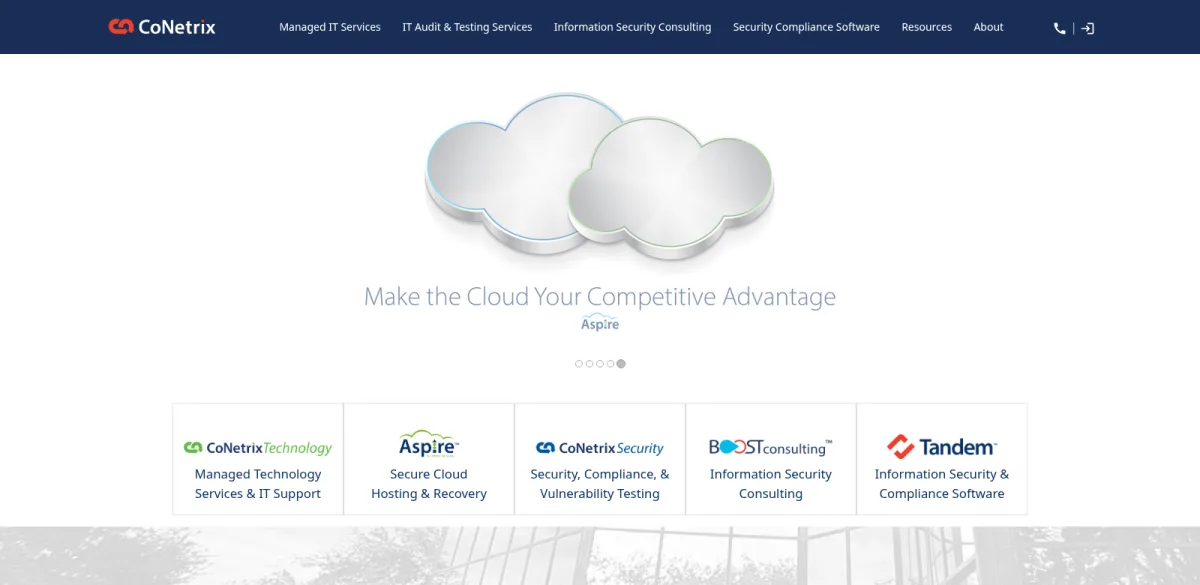
CoNetrix has been in Lubbock since 1977. Their primary vertical is banking and financial institutions, where GLBA and FFIEC compliance create audit requirements that parallel what higher education faces under FERPA. That security discipline transfers. The education documentation does not yet exist on their site.
Key Strengths
- 49 years of continuous operation in Lubbock, the longest tenure of any provider on this list. For institutions that weight stability and local commitment, nobody else comes close.
- A recently opened $15.3M purpose-built facility in Lubbock’s West End district. Not a rented suite — a permanent landmark, housing their technology, security, consulting, and compliance-software arms under one roof.
- A genuinely unusual structure for a firm this size: five distinct brands — CoNetrix Technology (managed IT), Aspire (secure cloud hosting and recovery), CoNetrix Security (vulnerability testing), BOOST consulting (information security consulting), and Tandem (compliance software). An institution can buy audit tooling and managed services from one organization.
- 4.8 stars across 33 Google reviews, the highest Google rating on this list.
- Partnered with Lubbock Christian University on a cybersecurity awareness symposium in 2022 — a direct connection to local higher education, though an event partnership rather than an ongoing managed services engagement.
Limitations
- Primary vertical is financial institutions. No education-specific page and no FERPA documentation. A higher ed IT director will need to verify CoNetrix has applied those controls in an education context, not just a banking one.
- No Clutch profile and no national MSP awards. Recognition is regional: “Best of Lubbock” for six consecutive years, plus Comparably’s Best Leadership Teams and Best Outlook (2025).
- Their scale and structure are built around bank examinations. If your institution wants a partner who already speaks accreditor rather than examiner, that translation work falls to you.
Best For
Institutions that value decades of local stability and financial-grade security controls, and are willing to bridge from a banking compliance framework to education compliance requirements.Not Ideal For
Colleges that require documented FERPA compliance methodology from day one without translating from a banking framework.Why They Rank #3
CoNetrix earns this spot on tenure, physical presence, and security depth rather than education specialization. The LCU partnership is a signal and the 49-year track record is real. But the score reflects what is documented, and education is not documented as a practiced vertical. There is a clear gap between them and the top two, and it sits entirely in that one factor.
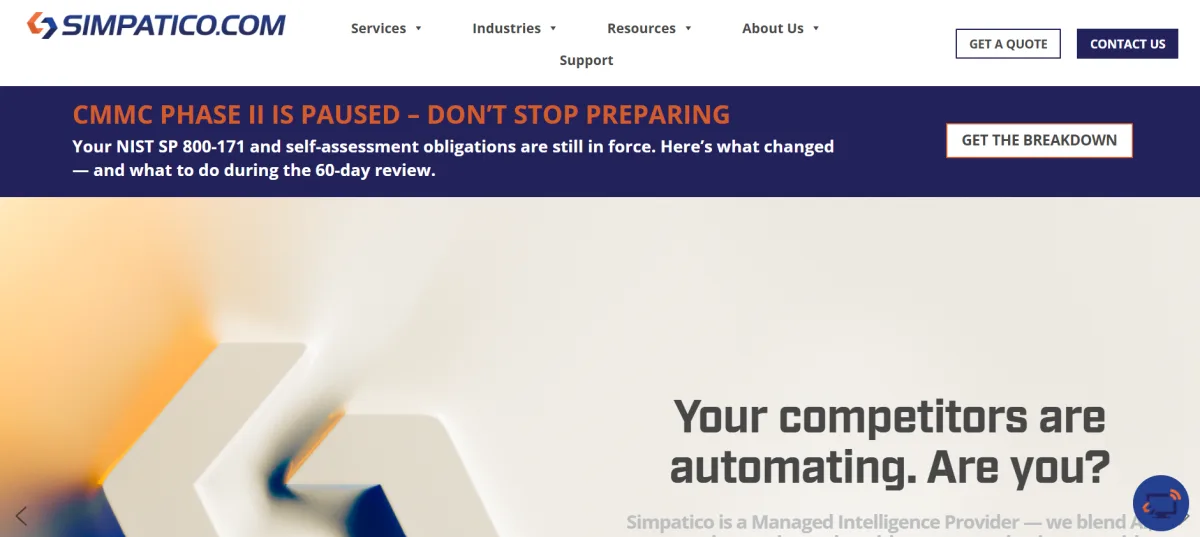
A cybersecurity-forward MSP with documented TX-RAMP experience. That matters because Texas law now requires TX-RAMP certification for any vendor providing cloud-based services to state agencies and public higher education institutions — a requirement many institutions are still working through with their vendor base.
Key Strengths
- TX-RAMP experience directly relevant to higher ed IT. Their VP has documented that Simpatico has helped multiple customers navigate TX-RAMP certification — a meaningful differentiator for universities evaluating cloud vendor compliance.
- CMMC Registered Practitioner Organization. Defense compliance discipline is a transferable signal in an education context, and their site leads with active NIST SP 800-171 guidance.
- Offices in Lubbock (HQ), Dallas, and Valencia, California. Multi-state presence gives them broader vendor relationships than a single-city shop.
Limitations
- No dedicated education page and no FERPA or CIPA documentation. The TX-RAMP experience is evidenced through social media posts rather than service pages, which is thinner than it sounds when procurement asks for documentation.
- No Clutch profile and no national MSP awards found. Review footprint is thin, and the figures available for this cycle were estimates rather than verified counts.
- Their public positioning centers on defense and manufacturing compliance rather than education.
Best For
Institutions or their cloud vendors needing TX-RAMP compliance guidance from a Lubbock-based MSP with documented experience in that certification pathway.Not Ideal For
Universities looking for a provider with a dedicated, published education IT practice and named FERPA documentation.Why They Rank #4
TX-RAMP experience is real and relevant for higher education. But one compliance pathway documented on LinkedIn does not equal a practiced education vertical, and the score reflects the gap between capability and documentation. Note the scoring caveat above: on the published sub-scores Simpatico and Blue Layer would swap positions.
A Lubbock-native MSP operating since 2002, with Inc. 5000 and CRN MSP 500 Pioneer 250 recognition. Solid general managed IT, and no documented education specialization at all — which on this particular list is decisive.
Key Strengths
- Inc. 5000 honoree in both 2020 and 2021 (#3402 and #3571), plus CRN MSP 500 Pioneer 250 in 2023 and an earlier CRN MSP 500 appearance. Among Lubbock-headquartered MSPs, that award stack is competitive.
- MSPAlliance certifications alongside the CRN recognition show real operational discipline.
- Founded in 2002 and locally rooted, with a corporate office and a separate operations office in Lubbock — plus published South Texas and North Texas contact lines, so coverage is broader than a strictly single-site operation.
- Documented stack covers managed services, advisory, cybersecurity, cloud hosting, disaster recovery, communications, networking, and physical security.
Limitations
- No education-specific content anywhere on their website. No FERPA, CIPA, or TX-RAMP documentation, and no higher education clients named publicly. On a higher education list, that is the whole story.
- No Clutch profile, and the Google review figures available this cycle were estimates rather than verified counts.
- No staffed offices in Amarillo, Midland, or Abilene, which limits coverage for institutions with satellite campuses across West Texas.
Best For
Small private colleges or administrative offices with straightforward IT support needs that do not require documented FERPA compliance from their MSP.Not Ideal For
Any institution handling FERPA-protected student records, research data, or TX-RAMP-regulated cloud systems where MSP compliance documentation is a procurement requirement.Why They Rank #5
Blue Layer is a capable MSP with real national awards — on a general Lubbock MSP list they would score considerably higher. They rank last here because the specialization factor for higher education returned no documented evidence. Note the scoring caveat above: on the published sub-scores Blue Layer would actually place fourth, ahead of Simpatico.
How to Choose a Higher Education MSP in Lubbock
Start with what your institution is actually required to document, then find the MSP that already documents it. In this market that single question does most of the sorting for you.
FERPA is the baseline, and your MSP’s documentation becomes your documentation. If your MSP does not name FERPA as a practiced compliance framework, you are absorbing that burden internally. That is workable if your campus IT team is large enough to own it. If you are outsourcing precisely because you lack that capacity, then an MSP without FERPA documentation is transferring work back to you at the exact point you were trying to offload it.
TX-RAMP is the newer requirement and it applies to your vendors, not just to you. Texas SB 475 mandates TX-RAMP certification for any cloud service provider working with state agencies or public higher education institutions. If you are a public university or community college, every cloud vendor you contract with needs certification or must be pursuing it. Ask your MSP whether they can guide your vendor base through that process — Mandry and Simpatico are the two here with documented TX-RAMP involvement.
For multi-campus systems, physical presence is the tiebreaker. An MSP with offices in Lubbock, Midland, Abilene, and Amarillo can put engineers on site same-day in any of those cities. CTSI and CoNetrix both have that four-city footprint; Mandry, Simpatico, and Blue Layer do not. If your institution operates satellite campuses across West Texas, this consideration can reasonably outrank compliance documentation — and it is the clearest reason to pick CTSI over Mandry.
Budget signals for this market. Managed IT for higher education in West Texas generally runs $100 to $250 per user per month for standard service, with compliance-heavy environments (FERPA plus TX-RAMP plus cybersecurity monitoring) pushing toward the higher end or beyond. Co-managed IT — where the MSP supplements an existing campus IT team rather than replacing it — typically runs lower per user, and is the more common arrangement for institutions the size of those in this market.
The Bottom Line
Mandry Technology ranks first because the methodology follows the evidence, and Mandry is the only Lubbock MSP that documents higher education as a practiced vertical: dedicated education pages, named FERPA and CIPA compliance, TX-RAMP experience, SOC 2 Type II certification, and 20 years serving colleges across the region.
But CTSI ties them on the underlying factor scores, and that is not a technicality — it is the actual decision most institutions face. If documented FERPA methodology is what your procurement process demands, choose Mandry. If same-day on-site coverage across Lubbock, Midland, Abilene, and Amarillo matters more, choose CTSI and get their education compliance posture in writing. CoNetrix is the stability play for institutions comfortable bridging from a banking compliance framework to an education one, backed by 49 years in this city and a new $15.3M facility.
The broader finding is worth repeating: this market’s MSP documentation has not caught up to its higher education density. Ask pointed questions during evaluation, and expect to do some of the compliance translation yourself with any provider except the top one.
Compare scores across other university cities on the higher education MSP national hub, or read how we score every provider.
Browse all higher education MSP rankings →Trust Score Summary
| Rank | Provider | Trust Score | Strongest Factor | Weakest Factor |
|---|---|---|---|---|
| 1 | Mandry Technology | 8.1/10 | Higher education specialization — the only documented practice | No Amarillo, Midland, or Abilene office |
| 2 | CTSI | 7.9/10 | Awards and four-city West Texas coverage | Education not documented as a specialization |
| 3 | CoNetrix | 6.3/10 | 49 years in Lubbock, $15.3M facility | No education documentation |
| 4 | Simpatico Systems | 5.2/10 | TX-RAMP and CMMC compliance experience | No industry awards, thin review footprint |
| 5 | Blue Layer | 5.0/10 | Inc. 5000 and CRN MSP 500 Pioneer 250 | No education-specific evidence at all |
This table shows totals and the decisive factor in each direction rather than the full six-factor breakdown. As explained in the scoring note near the top of this page, the per-factor scores from this research cycle did not reconcile against these totals in four of five cases, so we are not publishing factor-level bars we cannot stand behind. The totals are reproduced exactly as scored and no provider’s position was adjusted. Two orderings would differ on the published sub-scores: Mandry Technology and CTSI tie exactly at 8.075, and Blue Layer (5.35) would place above Simpatico Systems (5.13). Review figures for Simpatico and Blue Layer were carried forward as estimates rather than verified counts. Only Mandry Technology holds a Clutch profile; the missing-Clutch penalty applies to the other four. No paid placements, no provider-submitted data.
What Higher Ed IT Buyers in Lubbock Want to Know
Rankings on this page were produced using the itreviews.co Trust Score methodology, based on independent research conducted in July and August 2026. No provider has paid for or influenced their position on this list. Provider claims were verified against primary sources where possible; claims a provider makes about itself are attributed as such.